
A bill to require the U.S. Department of Veterans Affairs (VA) to conduct clinical trials into the therapeutic potential of marijuana for military veterans would have a negligible fiscal impact, according to a new analysis from the Congressional Budget Office (CBO).
However, just as when the agency issued its last analysis on the costs of an earlier version of the VA Medicinal Cannabis Research Act in 2020, CBO pointed to ongoing VA cannabis studies and said it “expects that those efforts would satisfy the bill’s requirement for research,” even though it’s not clear that’s actually the case.
H.R. 2916, VA Medicinal Cannabis Research Act of 2021 https://t.co/bbLOdXH8X2
— CBO Cost Estimates (@USCBOcostest) December 21, 2021
The bill, sponsored by Rep. Lou Correa (D-CA), cleared the House Veterans’ Affairs Committee for the third time last month. Earlier versions of the measure were approved by the panel in 2020 and 2018 but were not enacted into law.
It would mandate that the department launch a series of studies on using medical marijuana to treat PTSD and chronic pain.
While VA has expressed opposition to the reform proposal—as well as other modest cannabis- and veterans-related legislation—because it says the measure is overly prescriptive, CBO suggested in its analysis published on Tuesday that the department has already taken the basic steps to implement it.
Specifically, it pointed to “several studies examining risks and benefits of using cannabis to treat PTSD and chronic pain” that VA has approved.
One that was previously referenced in CBO’s score of the earlier bill evaluates the “effects of medical cannabis use among 136 participants with PTSD and other health conditions.” However, text of the legislation itself indicates that the ongoing study would not satisfy its research requirements, for several reasons.
First, the cited study only covers post-traumatic stress disorder (PTSD). The bill mandates that VA shall conduct clinical trials not just into PTSD, but also specifically on chronic pain as well as “other conditions.”
Second, the bill calls for studies involving multiple cannabis forms and varieties. The study CBO pointed to looks exclusively at synthetic CBD.
Congressional researchers did note that there’s “another interventional cannabis study focused on chronic diabetic neuropathic pain” that VA has more recently approved. Participants will begin to be enrolled in that study starting in January 2022, the report said.
“CBO expects that those efforts would satisfy the bill’s requirement for research,” it said, though it’s not clear which pain trial the office is referring to, or whether it would in fact include the required multiple varieties of marijuana under the legislation.
CBO said it would cost less than $500,000 between 2022 and 2026 for VA to comply with additional reporting requirements included in the bill. “Such spending would be subject to the availability of appropriated funds,” the analysis says.
—
Marijuana Moment is already tracking more than 1,300 cannabis, psychedelics and drug policy bills in state legislatures and Congress this year. Patreon supporters pledging at least $25/month get access to our interactive maps, charts and hearing calendar so they don’t miss any developments.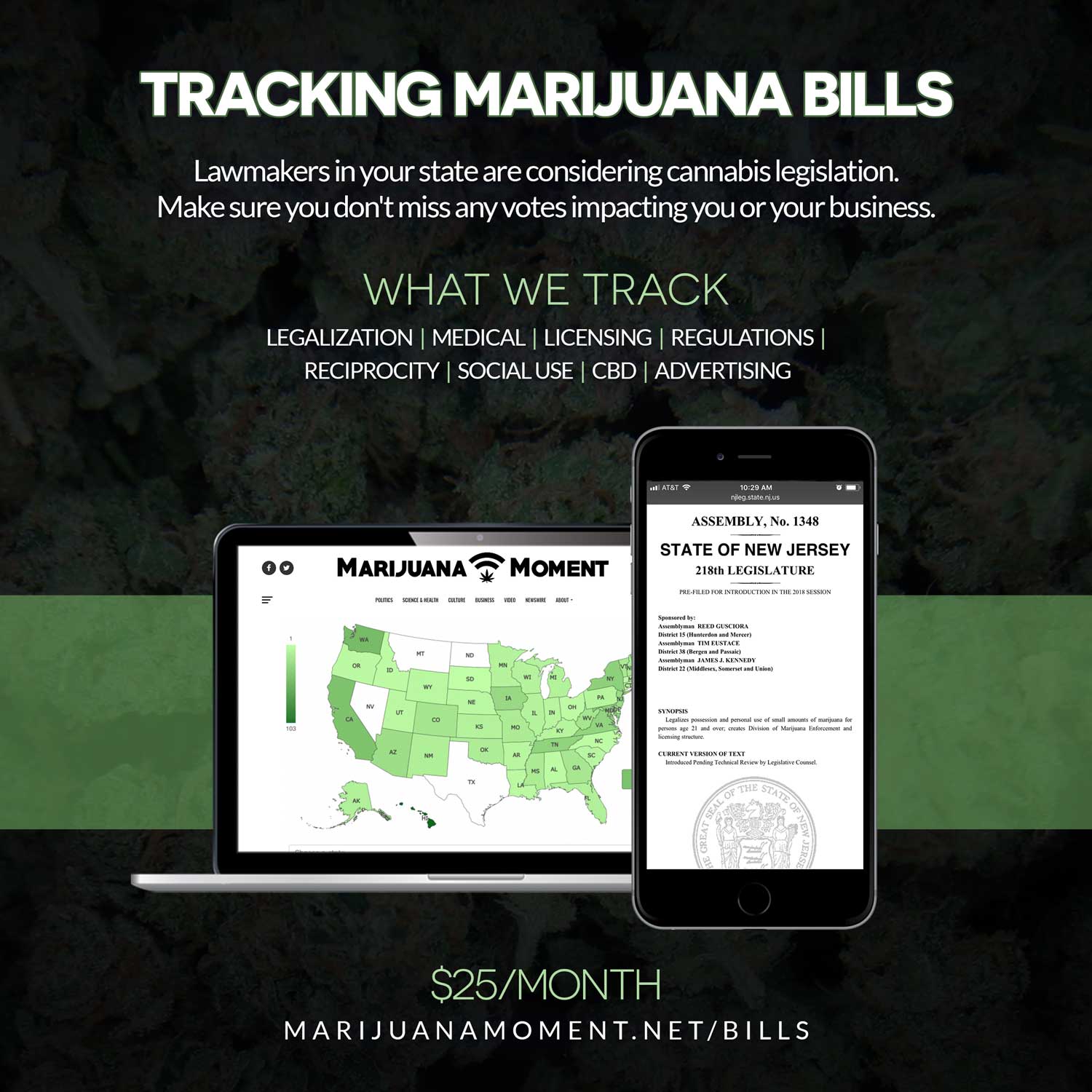
Learn more about our marijuana bill tracker and become a supporter on Patreon to get access.
—
The text of the bill says the VA secretary “shall carry out a series of clinical trials on the effects of medical-grade cannabis on the health outcomes of covered veterans diagnosed with chronic pain and covered veterans diagnosed with post-traumatic stress disorder.”
It lists both “required elements” of the trials and “optional elements.” When it comes to the chronic pain trials, the agency would have to look at the impact of marijuana consumption on osteopathic pain, opioid use and dosage, benzodiazepine use and dosage, alcohol use, inflammation, sleep quality, agitation and quality of life.
For the PTSD-specific studies, VA would examine the extent to which cannabis affects basic symptoms of the condition, the use and dosage of benzodiazepines, alcohol use, mood, anxiety, social functioning, agitation, suicidal ideation and sleep quality.
Optionally, the clinical trials “may include an evaluation of the effects of the use of cannabis to treat chronic pain and post-traumatic stress disorder on” pulmonary function, cardiovascular events, various forms of cancer, intestinal inflammation, motor vehicle accidents, mania, psychosis, cannabinoid hyperemesis syndrome, neuropathy or spasticity.
The bill further details specific methodological standards of the clinical trials that would be required. It would, for example, mandate that researchers use “not fewer than seven unique plant cultivars” with specific ratios of THC and CBD, and says the trials will involve “whole plant raw material and extracts.”
In addition to his standalone bill, Correa separately proposed requiring VA cannabis studies as an amendment to a defense bill that passed the House in September. But he withdrew it prior to a House Rules Committee hearing.
A Senate committee in June held a hearing on a bill to similarly require the department to conduct clinical trials into the therapeutic potential of marijuana for military veterans with PTSD and chronic pain—but a VA representative said that the Biden administration is opposed to the reform. The Senate panel has not yet voted on its version of the legislation.
During the last Congress, in 2019, the VA under President Donald Trump also came out against a series of bills that were designed to protect benefits for veterans who use marijuana, allow the department’s doctors to recommend medical cannabis and expand research into the plant’s therapeutic potential.
In 2018, the House Veterans’ Affairs Committee was the first congressional panel to approve a marijuana reform bill by passing an earlier version of legislation to encourage VA to conduct research on the medical benefits of cannabis.
Despite VA’s stated opposition to a variety of marijuana reform proposals in the past, an official with the department did say recently that it is “very closely” following research into the potential therapeutic benefits of psychedelics like MDMA for military veterans.
Earlier this year, a bipartisan coalition of congressional lawmakers reintroduced bills that would federally legalize medical cannabis for military veterans.
Rep. Greg Steube (R-FL) in January introduced a proposal aimed at ensuring that military veterans aren’t penalized for using medical cannabis in compliance with state law. It would also codify that VA doctors are allowed to discuss the risks and benefits of marijuana with their patients.
VA doctors are currently permitted to discuss cannabis with patients and document their usage in medical records, and those veteran patients are already shielded by agency policy from losing their benefits for marijuana use—but the bill would enshrine those policies into federal statute so they could not be administratively changed in the future.
A U.S. military veteran who was deported to Jamaica over a marijuana conviction was recently allowed to return to the country following a concerted push for relief by members of Congress.
Sens. Alex Padilla (D-CA), Tim Kaine (D-VA) and Mark Warner (D-VA) sent a letter to the head of the U.S. Department of Homeland Security (DHS) in July requesting that he reopen the case.
Thirty members of the Congressional Black Caucus separately urged the Biden administration to reopen certain deportation cases, including those involving cannabis.
Iowa Democrats Announce Plan To Let Voters Decide On Marijuana Legalization Amid GOP Resistance
Photo courtesy of Chris Wallis // Side Pocket Images.
Marijuana Moment is made possible with support from readers. If you rely on our cannabis advocacy journalism to stay informed, please consider a monthly Patreon pledge.


Be the first to comment